
Preparing for the Season Ahead: 3 Steps to a Strong Vaccination Strategy

August is Immunization Awareness Month, a timely opportunity to evaluate your vaccination strategy before the fall/winter respiratory virus season begins.
For long-term care (LTC) and senior living communities, this means understanding current vaccine guidance, noting what has changed from last year, updating processes, raising awareness, addressing barriers to vaccine uptake, and collaborating with your local pharmacy team to ensure residents and staff are protected and prepared for the season ahead.
Following these three steps can help set your community up for success this fall:
1) Understand What’s New and Updated
Each year, the Advisory Committee on Immunization Practices (ACIP) refines vaccine recommendations based on the latest evidence. Once adopted by the Centers for Disease Control and Prevention (CDC), those recommendations become official CDC policy. Refer to the CDC’s website for the most current Adult Immunization Schedules.
In post-acute, LTC, and senior living communities, the multidisciplinary team should perform an annual vaccination strategy review to:
- Review the latest CDC/ACIP immunization schedules, noting changes from the prior year. For example, 2025 guidance lowered the age threshold for routine pneumococcal vaccination from 65 to 50.
- Compare your policies to current CDC/ACIP guidance and plan updates to screening processes, consent forms, and clinical protocols. COVID-19 vaccination recommendations continue to evolve; check the CDC’s Morbidity and Mortality Weekly Report (MMWR) for updates.
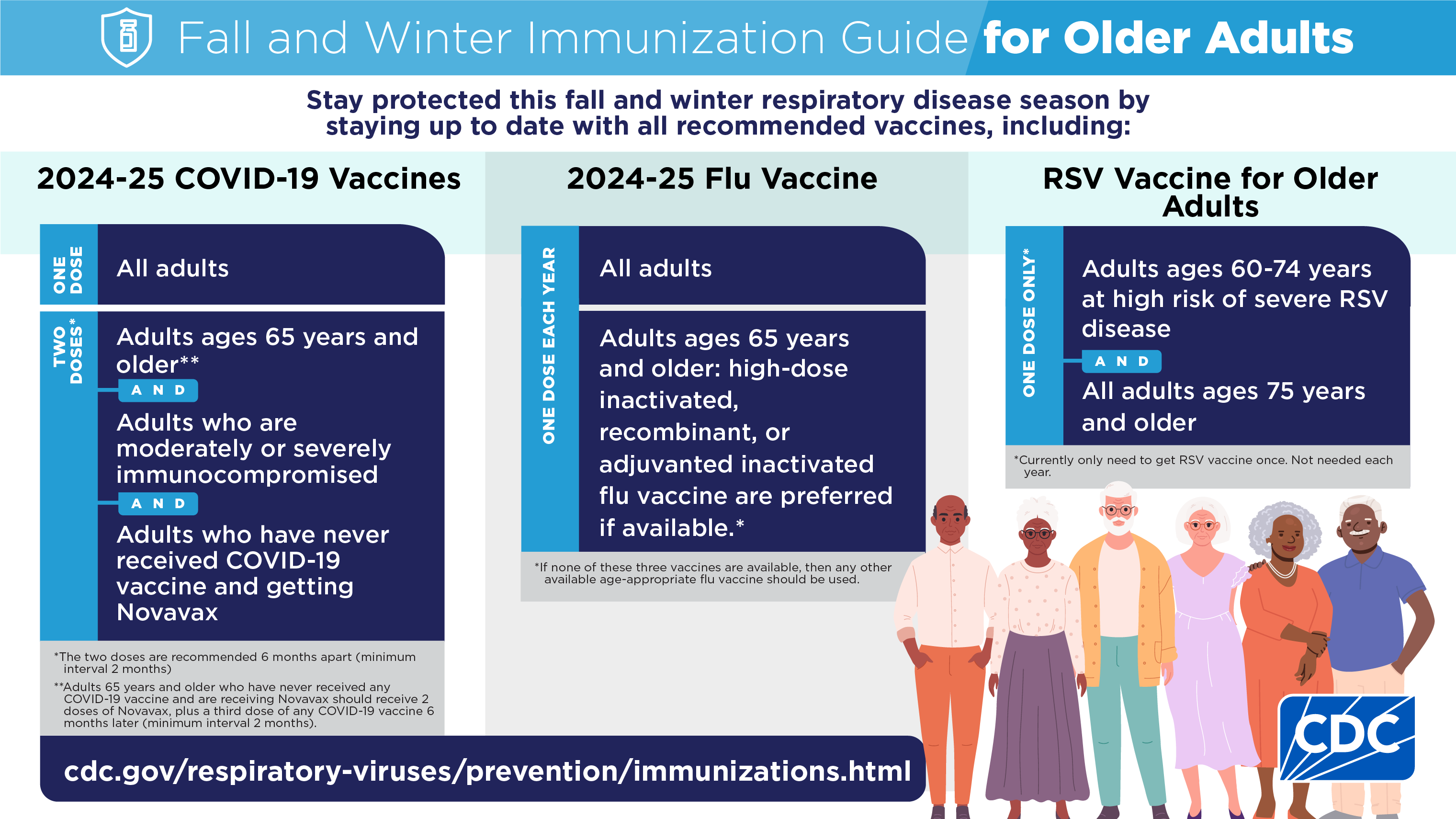
- Refresh awareness materials for residents and families. Consider using the Why Get Vaccinated? poster and the Fall and Winter Immunization Guide for Older Adults
- Provide staff education on core vaccines for older adults: influenza (flu), COVID-19, pneumococcal, respiratory syncytial virus (RSV), and zoster (shingles). The CDC’s Viral Respiratory Pathogens Toolkit for Nursing Homes is a good starting point.
2) Start Planning for Vaccine Clinics Early
Early and proactive planning for fall vaccination clinics sets your residents, community staff, and the on-site vaccination team up for success.
- Coordinate early with your local pharmacy team or other vaccine provider on clinic dates, logistics (space, cold-chain requirements), staffing needs, and anticipated dose counts for each vaccine.
- Launch resident and family awareness efforts early to build anticipation and address questions and concerns in advance.
- Begin collecting signed consent forms from residents or their responsible parties well ahead of clinic day; use vaccine consent forms that reflect current guidance and eligibility requirements.
- Be prepared to provide the most up-to-date Vaccine Information Statements (VISs) to recipients on clinic day.
- For new residents, begin at admission: capture diagnoses, allergies, and vaccination history, and screen for eligibility using tools that reflect the latest guidance.
These steps help keep your vaccination clinic roster accurate, ensure clinic days run smoothly, and improve vaccine uptake.
3) Raise Awareness and Build Confidence
Vaccines work best when more residents and staff are vaccinated. Improving uptake starts with clear, consistent information from trusted voices and removing barriers to access.
- Set seasonal goals. Set annual objectives and adopt initiatives aimed at improving vaccination rates, especially for flu and COVID-19, among residents and staff.
- Keep information consistent, visible, and from reliable sources. Post plain-language awareness materials in your community and provide details about clinic day, such as time, location, and “what to expect”.
- Lead by example. When community leaders vaccinate early and visibly, uptake among residents and staff improves.
- Support respectful conversations. Train teams in empathetic, person-centered communication to explore reasons for vaccine hesitancy. Partner with residents, family members, and staff through collaborative communication that honors their autonomy and supports decisions aligned with their values and needs. Ask open-ended questions and practice active listening. Keep the tone supportive and practical—the goal is to make the right choice the easy choice. When appropriate, engage residents’ physician or primary care provider for shared-decision making.
Beyond Vaccines: A Layered Approach to Infection Prevention
It’s worth remembering that vaccination is one pillar of a broader infection prevention strategy. The CDC’s Viral Respiratory Pathogens Toolkit for Nursing Homes emphasizes a comprehensive approach—vaccination along with testing, timely treatment, and everyday infection prevention and control—so communities have multiple layers of protection working together. Early preparation is the best way to protect residents and support staff throughout the year.

Michael Samarkos, PharmD, CPh
Regional Director, Clinical & Consultant Services
Guardian Pharmacy of Florida