
GuardianShield’s Insurance Optimizer Program: Improving Medication Access and Reducing Cost Burden

In senior living and long-term care (LTC) settings, prescription drug coverage issues are a common barrier to medication access for residents and a frequent source of frustration for families and community staff. Under Medicare and other benefit plans, prior authorizations, plan limitations, and non-covered medications often require coordination between the pharmacy, community, prescriber, and insurance plan to resolve. When not addressed proactively, these issues can result in higher out-of-pocket costs for residents and increased administrative burden for care teams.
To support this work, Guardian developed the Insurance Optimizer Program (IOP), part of the GuardianShield suite of services. The program focuses on identifying and resolving rejected third-party claims before they result in medication delays, cost increases, complaints from families, and additional workload for community staff.
Understanding Insurance Optimizer
When a prescription claim is rejected by the plan, Guardian’s local pharmacy billing specialists and pharmacists work to identify the cause and next steps—coordinating with the insurance plan, prescriber, and community staff. This may include facilitating prior authorizations, submitting additional clinical documentation, contacting prescribers to adjust therapy, or identifying clinically appropriate alternatives that align with the resident’s plan formulary.
If coverage cannot be obtained, the community, resident, and/or responsible party are notified in advance to avoid unexpected charges and support informed decision-making.
By resolving issues upstream, before medications are dispensed or billed, the program helps prevent delays in therapy and reduce administrative burden. Aligning therapy to the resident’s plan formulary also helps ensure medications are both clinically appropriate and financially accessible.
In addition to resolving claims, the program tracks the financial impact of these efforts. The difference between the original out-of-pocket cost and the final copayment or coinsurance amount is captured as resident savings. The program’s reporting capabilities provide clear visibility into claim activity and financial impact over time. These insights are shared with community leadership during routine partnership reviews. Residents also receive a savings snapshot with their monthly invoice.
Common Drivers of Rejected Claims
Rejected claims in LTC typically fall into three primary categories:
-
- Prior authorization required
- Plan limitations exceeded
- Product or service not covered
Each scenario requires follow-up beyond standard prescription processing, often involving multiple interactions to obtain approval or identify an appropriate alternative. Without this level of intervention, prescriptions often default to private pay, increasing costs for residents or, in some cases, for the community.
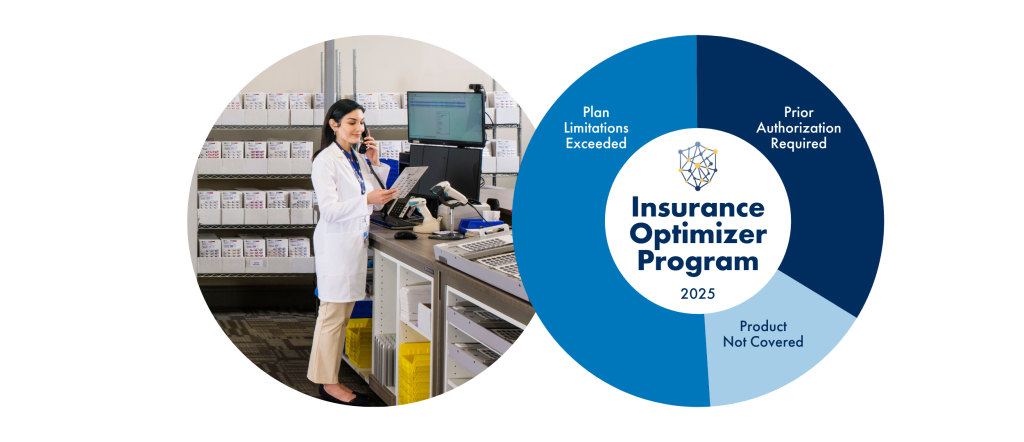
2025 Claim Rejections by Category
2025 Snapshot: Program Impact
In 2025, the Insurance Optimizer Program demonstrated consistent, measurable impact across Guardian’s network of pharmacies.
-
- $55,761,434 in total resident savings
- 94,261 residents with worked claims
- 549,212 worked claims
- $592 average annual savings per resident
Savings were generated across all major rejection types, including prior authorizations, plan limitations, and non-covered medications. Brand medications accounted for the largest share of total savings, with a significant portion driven by therapies used to treat behavioral health conditions. These medications are often among the most impacted by coverage restrictions, reinforcing the importance of proactive claim resolution in supporting medication adherence, avoiding disruptions in therapy, and ultimately improving outcomes for vulnerable populations.
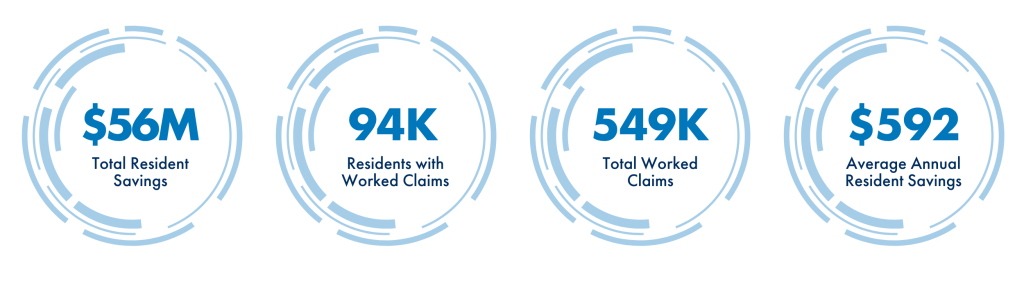
2025 Insurance Optimizer Program Results
Impact on Residents and Communities
For residents, the primary benefit is lower out-of-pocket cost and less frustration navigating complex pharmacy billing and benefits. By working rejected claims before they convert to private pay and aligning medications to the resident’s plan formulary, the program helps keep medications affordable and reduces the likelihood of unexpected charges. In turn, it supports medication adherence, contributing to improved clinical outcomes and lower overall healthcare utilization.
For communities, the impact is operational. Managing rejected claims and unavailable medications requires time, coordination, and follow-up. When handled by the pharmacy, this reduces billing-related questions, limits disruptions during med pass, and decreases the administrative burden on staff. It also supports regulatory compliance by helping ensure medications are available as ordered and that any changes or gaps in therapy are clearly documented.
Visibility Through Reporting
A key component of the Insurance Optimizer Program is its reporting capability. While resolving rejected claims is a daily reality in LTC pharmacy operations, much of the effort required often goes unseen. The program is designed to quantify that work and make its impact visible to both communities and residents.
Insurance Optimizer provides insight into:
-
- Number of worked claims
- Types of claim rejections
- Savings per resident and per claim
- Drug-level and category-level trends
This visibility helps community and pharmacy leadership understand where coverage challenges occur, the level of effort required to resolve them, and the financial impact of those interventions over time.
For senior living operators, these savings reports can serve as a valuable communication and marketing tool. Demonstrating how the pharmacy partner actively reduces out-of-pocket costs and manages complex coverage issues can support conversations with prospective residents and families, reinforcing the value of using the contracted LTC pharmacy partner and simplifying medication management within the community.
A Necessary Component of Medication Management
Since plan benefits change each year, communities should expect their LTC pharmacy partner to proactively address rejected claims as part of routine medication management services.
Consistently working these claims helps ensure residents receive needed medications at the lowest possible cost while reducing administrative burden and supporting more efficient operations within the community.
To learn more about the Insurance Optimizer Program and the GuardianShield suite of services, contact your account representative or visit guardianpharmacy.com/guardianshield.